
Intermodality and sustainability in transport, 4 EU proposals in the Green Deal

Chemical safety, new bans and rules in 2022
15 January 2022
Right to repair. Work in progress in Europe
29 January 2022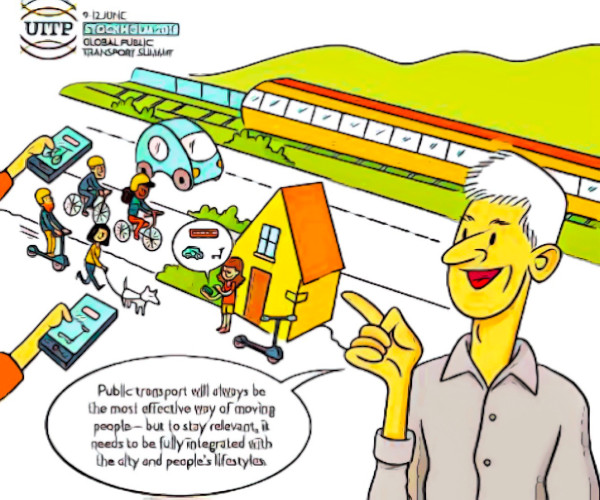
The ecological transition announced on 12.11.19 in the trillionaire European Green Deal among other things, it is expressed in the modernization of the transport system in the EU, under the banner of intermodality and sustainability.
Four proposals - adopted by the European Commission on 14.12.21 (1) - and two questions on disability and discrimination, to follow.
Premise. Intermodality and sustainability of transport in the EU
Intermodality and sustainability they must lead the modernization of the transport system for people and goods in the European Union. Strengthen connectivity on strategic corridors - to be integrated with a North-South Corridor in Eastern Europe - and promote modal shift.
Encourage the passage from road transport to rail transport, even at high speed, as well as on inland waterways. Public investments in transport and electricity supply infrastructures, new digital technologies, sustainable urban mobility through intermodal connections and cycle paths.
The goals declared is to drastically reduce greenhouse gas emissions in the transport sector, which today accounts for 25% of the total in the EU. -55% by 2030, -90% by 2050, compared to 1990 data.
1) TEN-T (Trans-European Transport Network)
The TEN-T multimodal network (railways, inland waterways, sea routes and motorways) today connects 424 major cities with ports, airports and terminal railway. The European Commission, following the consultations, proposed a reform of the reg. EU 1315/2013. The main news:
- adaptation to the high speed (> 160 km / h) of railway lines, on the corridors of the TEN-T network, by 2040. With a view to offering passengers competitive rail connections (with air transport, ed) throughout the Union,
- guarantee of 'good sailing conditions' for canals and rivers,
- increase of terminal of transshipment, increase in handling capacity in terminal freight, reduction of waiting times at rail border crossings, longer trains to transfer more freight by rail with the option of transporting trucks on the entire railway network.
9 corridors, 424 cities with sustainable mobility
Nine 'European transport corridors' they are defined to integrate railways, roads and waterways. The infrastructure network will be developed in three phases, core network by 2030, core network extended to 2040, global network by 2050.
The 424 cities in the TEN-T network they will have to develop sustainable urban mobility plans in the direction of 'zero emissions', with an increase in public transport and pedestrian and cycling infrastructures.
2) Rail transport
Commission's objective is to double high-speed rail traffic by 2030, triple it by 2050. To this end, it plans to intervene as early as 2022 on:
- multimodal (i.e. integrated) ticket office smart,
- search services for routes and tickets at affordable prices and assistance in the event of service interruptions,
- possible VAT exemption on train tickets,
- repeal of 'redundant' national technical and operational standards,
- scheduling and capacity management requirements, to ensure faster and more frequent rail services,
- guidelines for access prices to infrastructures, in 2023, to encourage competition.
3) Intelligent Transport System
The Commission proposed a reform of the directive Intelligent Transport System (2010/40 / EU) of 2010, to update it with respect to the emergence of new road mobility options (eg automatic driving), mobility apps and connected mobility.
The idea in this case it is to make crucial data on speed limits, traffic circulation plans and road works available in digital format, along the TEN-T network and eventually covering the entire road network. It will also ensure that essential safety-related services are made available to drivers along the TEN-T network.
4) Urban mobility
Lo Urban Mobility Framework indicates the way forward to reduce emissions and plan sustainable urban mobility plans. Priority attention to public transport, multimodal hubs with digital solutions and services, pedestrian and bicycle paths.
Urban zero-emission fleets (electric and hydrogen), including taxis and taxi services ride hailing (eg. NCC, Uber, Lyft).
The proposal outlines the funding options for local and regional authorities to implement these priorities. The first objective is the climate neutrality of transport in 100 cities, by 2030. To be extended to 424 of the TEN-T network and so on. In 2022, the Commission will propose to Member States a recommendation for the development of national plans. However, without defining harmonized rules on sustainable micro-mobility (e.g. electric bikes, scooters).
Disability and discrimination
It remains to ask what will be the fate of disabled and frail people. In Italy 83% of railway stations are devoid of accessibility requirements, as well as almost all the bus fleets that manage provincial, regional and inter-regional transport.
Architectural barriers and disservices systematically afflict urban railway and subway stations, as often we denounce together with the broken platforms of city buses. As for the services of personal mobility, utopia surpasses all prospects.
Dario Dongo
Cover image from https://uitpsummit.org/meet-our-mobility-artists-hans-arby/
Note
(1) European Commission. New transport proposals target greater efficiency and more sustainable travel. Press Release, 14.12.21. https://ec.europa.eu/commission/presscorner/detail/en/ip_21_6776

Dario Dongo, lawyer and journalist, PhD in international food law, founder of WIISE (FARE - GIFT - Food Times) and Égalité.


